Guitar Lessons by Chip McDonald - chip@chipmcdonald.com

Thursday, March 12, 2015

Is the Sam Smith Song a Rip Off of Tom Petty's Song?

Is the Sam Smith Song a Rip Off of Tom Petty's Song?

Technically, here is why it is....


"Stay With Me"?  why no,  " I Won't Back Down"....

 I'm not going to attempt to educate the reader to the nomenclature I'm using, so I'm going to get down to brass tacks.   

 The verse to "Won't Back Down" features a chord progression that works as follows: vi for half a bar, V for the second half of the measure, then I for a measure.   This is identical to the Sam Smith song.   The progression repeats twice, then for a third repeat IV replaces I.  On the 4th repeat vi, V, I reappears.

 Structurally, the Sam Smith song is identical, save Petty's "left turn" to IV on the 3rd repeat.  But, both feature a 2 bar progression that does 4 rounds, effectively the same.

 That alone is not enough to constitute "copying", progressions are quite generic typically, and while I think one can argue that a progression can infer a melody, here it does not. However, as I present here, the chord progression provides the context for how a simple melodic theme is copied in the Sam Smith song.

The melody to both songs are based on a descending themes.  Initially, though, the first marker that sets up the recognition of the Tom Petty song is that the Sam Smith melody leads in off of the 3rd to the 5th of the I chord, on the fourth beat and the following 8th note ("and I", "won't you"), stacatto.

 Again, this alone isn't something I consider "super original", I could probably scrape up other examples.  The problem is that within the composite of this section of both songs, it is "strike 1" in my opinion.

 The rhythmic gap in both vocal melodies sets up for both melodies to hit the root of the vi chord on beat 2.  This is what I consider to be "strike 2" - the same part of the chord, on the same beat.  Furthermore, Strike 3 would be that the first syllable in both sustain until the & of beat 3.  At this point I consider the Sam Smith song struck out, but there is more.

 The rest of both melodies work the same way: they follow the root of the first two chords, then land on the third of the I.  Strike 4.

 Strike 5: the 4-& cadence returns as the pickup on the second repeat through the progression.

 Strike 6: on the third repeat of the progression on both songs, the melody's rhythm becomes syncopated over the rhythm section.

 Strike 7: the "payoff" - the hook, of both songs - the title of the songs are repeated as a resolve on the I chord on the 4th repeat of the chord progression.


I could get more detailed, but I don't see the need to.  In my experience of analyzing multiple songs daily during guitar lessons, this is maybe par for the course these days, I've heard more egregious thievery.  On the other hand, the thing about this particular example is that, as shown above, the *composite* across time of both sections has many points that are conceptually the same. 

 In other words, it's not just a couple of notes of a melody placed in a new context (ala hip hop productions), but obviously a contemplated effort to create a conceptual facsimile of the Petty song.  The really bad thing in my opinion, is that these days singers are so well produced that their delivery is so filled with faux conviction, I think that blinds people to the derivative nature of the music itself.

 Which from a guitar playing standpoint is the take away from this post.  Playing with complete conviction is important, it can hide many a "musical" flaw.  Eddie VanHalen plays some things that one could construe as being "musically questionable", but he does it in such a way that the attitude he conveys in his execution blinds one to that.  Same can be said for many classic jazz greats.  "Free jazz" would not exist but for conviction in execution.  Even John Coltrane can be heard on bootleg recordings getting really, really "out" - but you accept it because of how he's doing it, you know that it's part of the process.

 Which is contrary to the Pop Music Machine Process: the conviction is being used to pull one over on the audience.

 $.10. 


Friday, December 26, 2014

A Quibble with Guitar World's "Top 50 Effects/Processors" List

  A friend of mine, one Mr. John Donelly, brought to my attention that Guitar World had published a "Top 50 Stomp Boxes, Devices and Processors of All Time" list.  

 It is kind of a curious mixture of truth and advertising (note that I wrote ".. and advertising", not "... in advertising").  I've played through or owned nearly all of the pedals in the list, save the Seek Wah, the Lovetone Meatball, the Gig-Fx Chopper, and ironically the last one on their list, the Ibanez Flying Pan.  While each of those may be the Greatest Thing I've Ever Missed, I'll just pretend they don't exist for my purposes here today.  In other words, that gives me 4 pinch hitters I'm going substitute later.

The first thing that I noted was the Line 6 DL4 delay pedal being listed so low.  IMO this is one of the most well designed pedals/devices of all time.  It essentially does everything you want a delay to do, gives you 3 (possibly 4) programmable presets, the way you interface with it is "didn't read the manual" intuitive, and it sounds great.  

 Likewise, you can spot this metallic green pedal on a lot of pedal boards.  I would say it's maybe as ubiquitous as Guitar World's #1, the Tube Screamer.  It sometimes seems like an easy bet to say "there will be a DL4 on That Player's pedal board" without looking.  I've had one for a long time, still works great, and do not expect someone to make something more functional.  

 The Fuzzface is down at #28.  I cannot fathom how this pedal did not make the Top 10?  Without this pedal you don't have Jimi Hendrix effectively (hmm.. maybe pun intended?).  You also don't have Eric Johnson, and plenty of famous players and classic songs.  The quintessential sound of a Fuzz Face is not as splatty as a Foxtone, but I would say more iconic.  Also more more practically useful.

 Echoplex at #18?  Again, a Top 10.  Without this device there is no Eddie VanHalen, countless guitar players in the 70's, and for that matter "moments involving delay in an age with you didn't really have many other choices".   Look at the fact that most delays feature an "Echoplex" setting - they have other pedals on the list which has an "Echoplex" setting.  If imitation is a form of flattery that alone should make it higher.  

 The Rangemaster is down at #17.  Granted, a very unknown pedal today BUT again, without this pedal you lose Queen, Judas Priest, lots of Clapton, Tony Iommi, and another plethora of 70's iconic artists whose sound relied on this circuit or a variant.  

 Some of the items on their list I find sort of suspect.  MXR Carbon Copy is really a "Top 50" pedal?  Digitech Jam Man?   The order seems a little strange, too: having worked in music stores most of my life, I'm not sure the Metal Zone should be in front of the DS-1.  I can sort of understand the Electro-Hamonix bias, but the Big Muff being #3 over the Fuzz Face seems a bit peculiar to me.

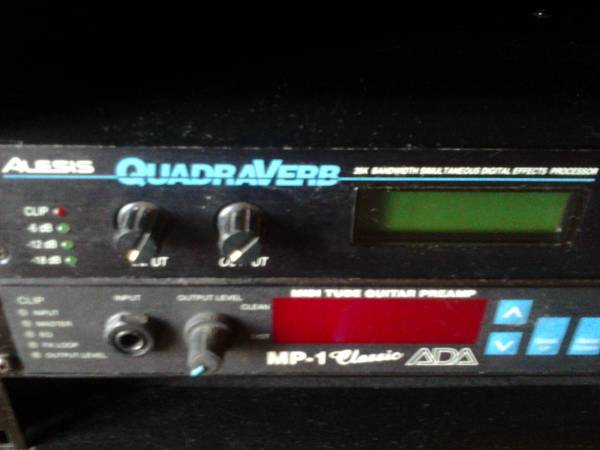
 As does some omissions.  The ADA MP-1 was a very big seller, and the harbinger of the rack-mount midi-switchable-programmable era.  A good sounding and versatile unit, reasonably priced, well made.  At one point in the late 80's this was seen in almost everyone's rack - it just made too much sense for that era.  

 Similarly, the SPX-90 was a Very Big Deal when it debuted, not only for it's (unique at the time) glowing LCD display (I remember at the NAMM show that year Yamaha having a big room with wall-to-wall SPX-90's, and you could read a book from the alien green glow...), but also because of the then new multi-effect capability AND midi switchable function.  While it did drop out when switching programs if the signal was ran serially, it was THE thing to have visible on stage in your rack for every touring artist for a few years (for better or worse).  Storeable "presets" were a revelation for a $500 device that basically could do every time-domain based effect.  
  So that's two of my wildcards down.  The last two are very related as far as I'm concerned, and their function and retail sales are almost indentical: the Scholtz Research Rockman X-100, and the Line 6 Pod.

 Both fulfilled the same mission - one box that did "everything".  These were the OG "plug in".  For both units, their sound was heavily responsible for a big chunk of recordings during their respective ears.  No offense to the Gig-Fx Chopper, but way more important and definitely should be on that list.

 Some other wildcards: the early 60's Fender stand alone reverbs;  Korg SDD-3000; Ernie Ball Volume Pedal; Binson Echorec and the Roland Space Echo (both of which are more unique and iconic in use than the MXR Carbon Copy IMO); Deltalab Effectron/Effectron Jr. (first affordable digital delay); Alesis Midiverb (first affordable digital reverb (barely...); Alesis Quadraverb (basically came on after the SPX-90 as being the first programmable multieffect that didn't drop out on patch changes, AND could do 4 effects simultaneously)(and had a unique sound; see Jeff Buckley's "ambient" effects); Rocktron Intellifex (offered 8 modulated-voiced delays in one unit); Peavey EDI direct box (preceded the Radial/re-amping signal path solutions); Hughes and Kettner Cream Machine (great idea too soon, low wattage mini-power amp); Antares power soak; Rockman power soak.


Long time...

Sorry for not posting in so long, I only recently discovered a numbered of people were actually reading this routinely!  Sorry!

Thursday, June 2, 2011

Going to Sleep to a Metronome

I recently had this discussion with a student about gaining an intuition about tempo ranges, and refining one's awareness of specific tempos.
I recommended something that I know Steve Vai apparently did, which is to go to sleep with a metronome on.  The purpose being, to be able to memorize a specific speed in bpm (beats per minute) and recall it at will.

 Having said that, I will say that while I have tried that long ago - just for the sake of it - I can't do it for no other reason than I've always been an insomniac.  I suggest one try a tempo deliberately slower than 60 bpm, to avoid the "clock ticking" phenomenon, but to also try to use a tempo that is a subdivision of a song one is very familiar with. 

 While I never successfully managed to sleep with a metronome on, I would recount that as a kid I would often "mainline" songs that I like.  As in, as a 12 year old in those days set my cassette player to repeat a particular song I liked over and over and over and over.  Not with any kind of intent - I didn't consider myself "a musician" then - but because I really liked the music.  I looked forward to hearing exact moments in a song - later to realize the things that happen on a time scale measured in milliseconds - a bent note, a snare accent, any number of things.  In doing so I believe the familiarity of being able to ponder the rhythmic events in a song on a minute scale helped me later on as a professional musician.

Sunday, May 22, 2011

"I Could Get Used to This" - original song by student Ben Lowery

"I Could Get Used to This" - Ben Lowery

Wednesday, January 26, 2011

Reality and Expectation

I've noticed a recent phenomenon: students comparing themselves to other people playing on YouTube.

I hear (paraphrased) "I'm not as good as this guy playing this online", or "this guy can play this online so well, why can't I?".

I think I know the root cause of this, and I'd like to diagram why it's flawed, and an unhealthy attitude.

There was a time when "art", as a concept, was universally known as something that was inherently "limitless". Which is to say that, while one could practice the craftsmanship of it, the result was beyond the scope of human comprehension: what came out contained so many variables that it had to be the combination of so many factors it couldn't be readily quantized into a purely formulaic approach.

There is the concept of theory, which merely explains the components and their interactions. The theory itself does not create the result. The result is a purely human thing. Likewise, the mechanics and technique in pursuing a result doesn't automatically create the result, either.

YouTube does not show those two aspects: what went into attaining the knowledge of what created the result, and what effort went into acquiring the technical/mechanical skill that occurred before it went on YouTube.

That process (which is a part of taking guitar lessons) is something that there is no clearly defined analogy for. It's kind of like studying to be a doctor. It's kind of like learning the craft of sculpting, or painting. It requires "anthropological" study, like history - one has to know what came before. In other ways it's nothing like those things at all.

The modern day thought that a process to do something can't be tidily broken down into defined, component parts with a defined, predictable outcome, is non-existent. In the 21st Century, one can take a class to learn to do anything, and in a given amount of time, and with a clearly defined outcome. It's how everything works today: you do not do anything without formal training of some sort, and that training always, automatically imparts exactly what you need to know.

Playing a musical instrument doesn't work that way. Thankfully, it doesn't - or else it would be quite boring. You shouldn't take guitar lessons expecting to be able to do exactly what you see someone on YouTube doing. You probably don't have the exact same motivation, the exact same background, the exact same experiences. Which isn't to say one shouldn't try; because the pursuit of it will create it's own unique outcome. The problem occurs when one sets preconceived ideas into motion about how long it should take, and how much effort is involved.

One should have an appreciation for the variety of results that comes from different musicians, and know that time invested is the only common factor. That time investment can be spread over a week in 1 hour increments, 5 hour increments - or 30 minutes per week over years. As a field of study, there are countless avenues; you can't devote yourself to everything at once.

There was a time when, if a person could make a musical instrument do anything resembling "music", it was looked upon as an accomplishment. There are billions of people on the planet; that on YouTube there are thousands demonstrating different things on musical instruments in varying degrees should not deter someone from pursuing their own musical interests. Once you start playing an instrument, on whatever simple level, you are playing an instrument. You are now different than you were before, and different from the Other People on the Planet that Can't Play an Instrument. That should be a worthy accomplishment in itself; being concerned that there's a 10 year old kid in Taiwan playing a VanHalen guitar solo double speed should not enter into the equation.

Saturday, November 20, 2010

Friday, November 19, 2010

The Secret Galaga Phrase

The daily auditory sensory overload, courtesy of Josh Timmerman. "Two Guitarists + Fingerboard Symmetrical Diminished/Altered 9 licks":

David Bash Plays Original Metal Music (with Xylophone)

The Secret Galaga Phrase

"Two Guitarists + Fingerboard Symmetrical Diminished/Altered 9 licks":

Josh and Chip Invaded by Galagans

Saturday, September 4, 2010

The Strange and Abstruse World of Guitar Pickup Descriptions


I recently installed a Dimarzio Area 58 and EJ Custom pickup in one of my guitars. They're great. That amazes me because it's the first time I bought pickups I've never heard before, just based on the specifications/inductance figures.

Almost. I did temper that with a lot of anecdotal descriptions. Which is a dangerous thing in the guitar world, because people have very different ideas about how to describe what they're hearing - or think they're hearing.

I think pickup manufacturers (and gear manufacturers in general) take advantage of that a little bit. The following are some excerpts from different pickup manufacturer sites, descriptions of what their pickups sound like:

"The result is an almost vocal, three-dimensional sound that jumps off the string faster and stays true as it sustains. "
"They’re bright and have great presence without sounding thin. "
"The highs are actually bigger and smoother than either model."
"are not polite-sounding, and they’re not for the inexperienced, but – if you’ve got the chops and a hot amp – your sound will burn."
"Its treble response is warmer and smoother while bass response is tighter and brighter."
"a unique mid-range “growl” that’s a result of a hand-calibrated magnet structure. "
"a deeper sound from the low strings without losing any punch"
" It has a warm, smoky sound, fattens up "
"Single notes have weight and presence, and chords have detail and dimension. "
" organic and open tone while still maintaining the clarity and response"
"beautiful round tones"
"sound is full and expansive"
"it's louder and the highs have more depth. The lows and mids are more open"
"big, open sound with just a subtle hint of glass"
"The tone is big and percussive without being too harsh."
"vintage-style punch and ripping tone that will sear through almost anything"
"design retains the depth and the sparkle that is the hallmark of vintage tone."

If only it were that simple.

Student Robert Long plays "Creep" by Radiohead

Former student Walker Howle's band _Dead Confederate_: the making of "Sugar"

Improv with student Tyler Willing

Student Mike Posada plays "More Than a Feeling"

Student Demo (old)

Student Ben Lowry Plays "8 Second Ride" by Jake Owens


Student Ben Lowry plays 8 Second Ride by Jake Owens

Wednesday, December 16, 2009

Put a new kit guitar together...

Warmoth parts. Metallic Jovian Thai Tea Borealis color. Stainless frets. Now for some decent pickups...

[caption id="" align="aligncenter" width="604" caption="The backside of the guitar (before I ruined it....)"][/caption]

Friday, May 15, 2009

Prince Says Learn How to Play Real Guitar

... instead of Guitar Hero:

http://www.gamespot.com/news/blogs/sidebar/909182374/26865888/prince-kissed-off-guitar-hero-deal.html

Windows of Attention

You never finish learning how to "do" music.

Which goes against all conventional thought.   Let me explain:

When my parents went to school, they had "math class".   They didn't change subjects every semester, and per grade they did not go from "Algebra I" to "Geometry I" or some such.  Because it was all considered "math".

In my continuing series of harangues about motivation, I'm going to suggest that in the effort to streamline "education", by compartmentalizing monolithic concepts ("math") into smaller ones ("Trigonometry II") people are unlearning the notion of both how to view undertaking learning a very large concept and the time/effort required to do so.

It's occurring to me that most new students arrive with preconceived notions of "how long this is going to take".  For adults today,  it seems that the expectation is based around "semester" long lengths of time.   Things that may have taken Eric Clapton years to work out, by hours of daily ardent study and practice, are expected to be "mastered" in a couple of months.

It doesn't work that way.  "Playing an instrument" is like math, or grammer, or physics.  It's as big of a subject as the medical field, astronomy, or anything you care to think of - Einstein credited playing and instrument to giving him insight into discovering the properties of E=MC^2.

Which is why learning to play music is FUN!

It can't be summed up in one book ala "Guitar for Dummies", or the experience of getting through all the levels of a video game, or buying a "Learn at Home" DVD.   It goes on and on and on and on and on.    It is not close-ended; it is the math of the number of notes in existence x every human's subjective opinion of how you arrange those notes.

Which is endless.   The pursuit of music appreciation requires more than a few seconds of concentration, more than a few minutes every day for a couple of months.    Which isn't to say that if that is all one can presently one can afford one shouldn't do it, but that the process of learning it should start "now",  and that because it's such a deep subject the reward of studying it is equally deep.